and Moser-type Art Glass
All glass on this page is available at Star Center Antique Mall in Snohomish, Washington. Call us at 360 568-2131 or email us.
  |
    |
    |
 Pair
of Moser artist signed clear amber glass
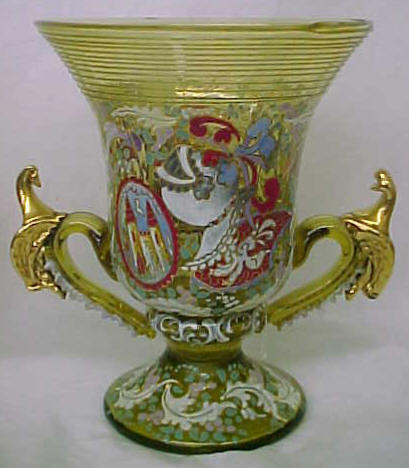
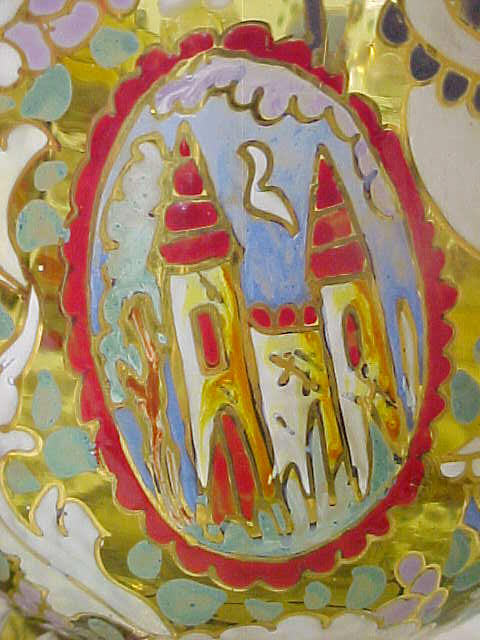
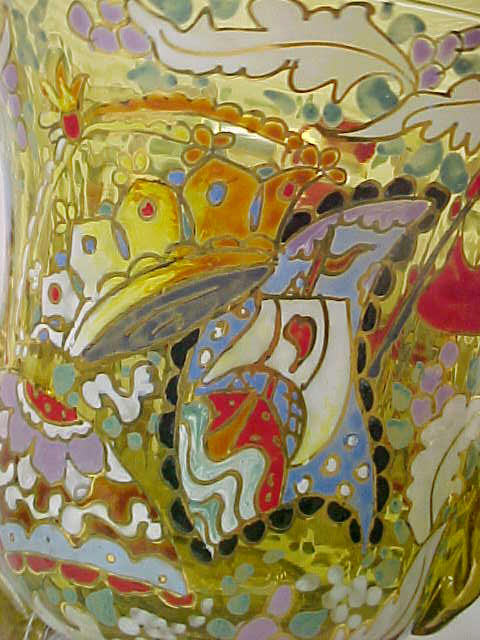
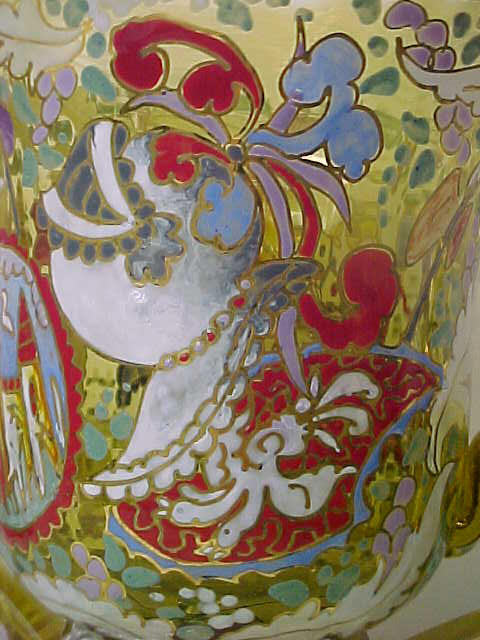
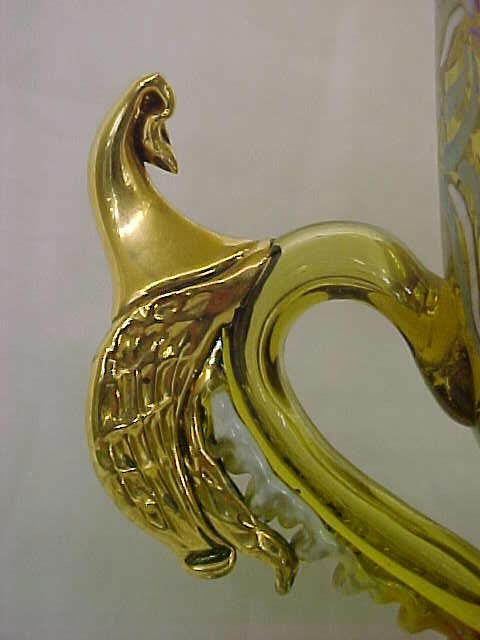
vases with very detailed handpainting, thread wrap around top, and gold bird handles. One vase is painted primarily with butterflies. The other vase is decorated with ships and castles. Each measures 8.5x 6.5 inches. $295.00 each. Both are in excellent condition with no chips, cracks, or excessive wear. |
 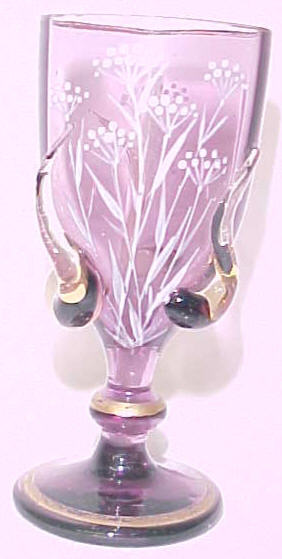  |
  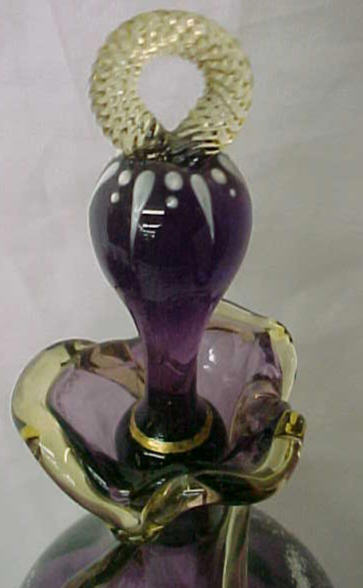 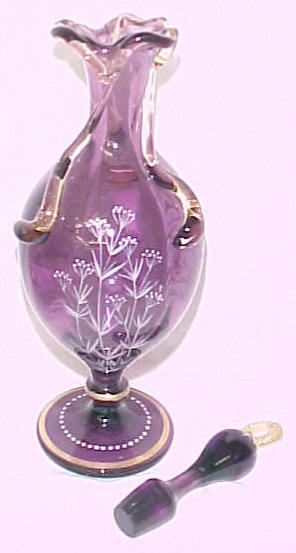 Moser set including10.5 inch lavender decanter with seven 4 inch cordials and 7.5 inch tray. White floral enamel decoration with amber glass applications. Gold trim. Loop amber handle. Beautiful overall condition. Set is priced at $500.00. |
  |
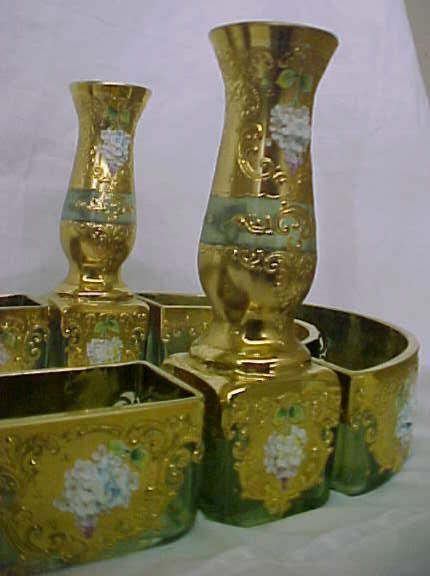 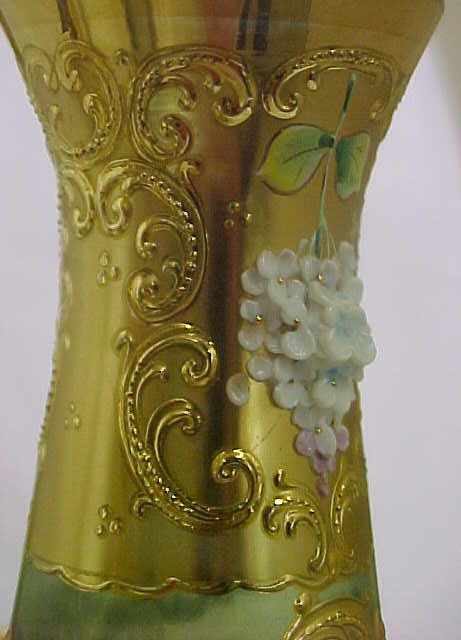 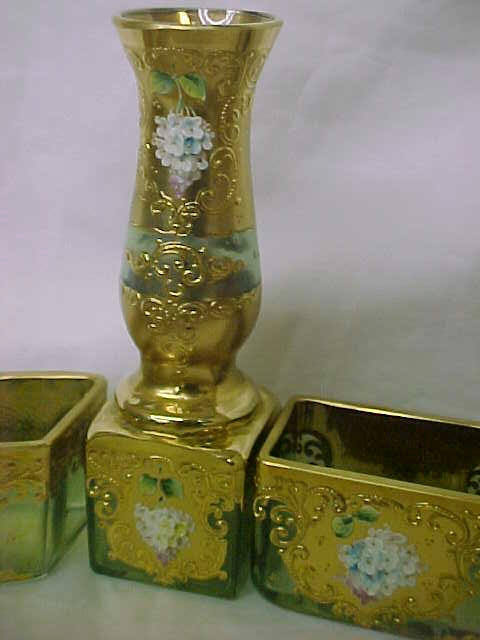 |
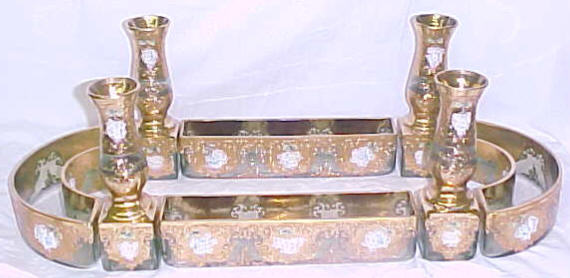
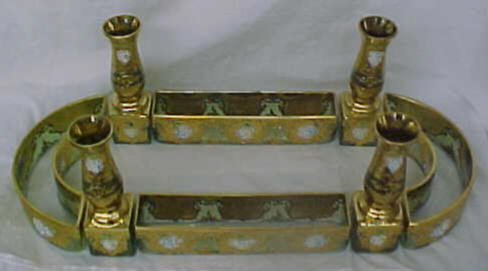
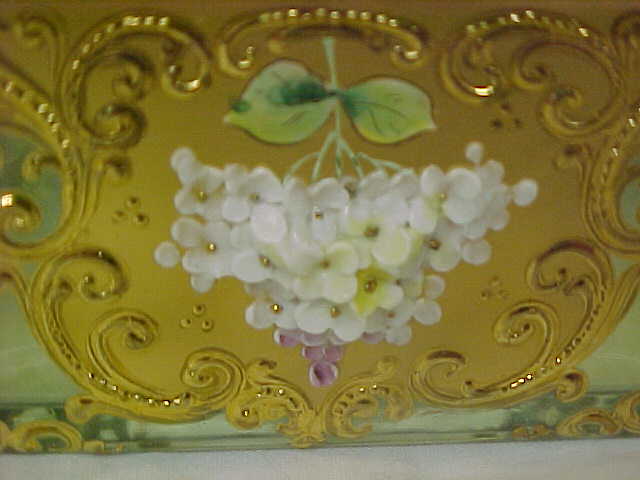   21x9 inch 8 piece Moser clear green glass high relief enameled floral centerpiece with four (4) 7.25 inch bud vases. Very detailed with handpainted green leaves and gold trim. The condition is fantastic all around with one very minor rim nick found. This rare and dramatic set is priced at $2400.00. |
 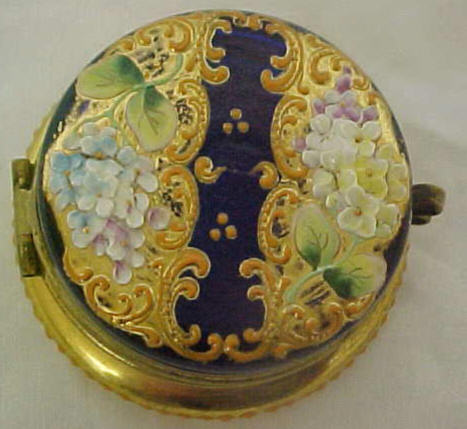 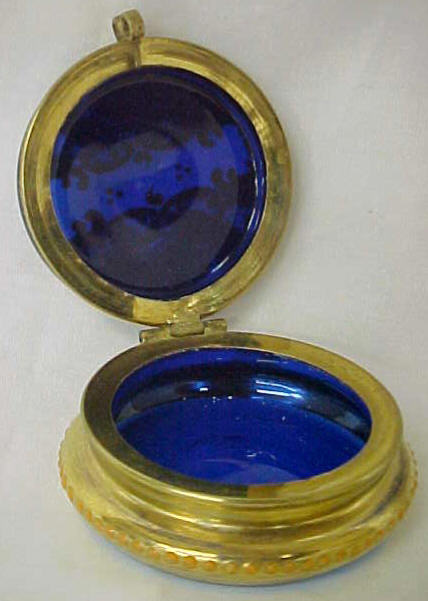 |

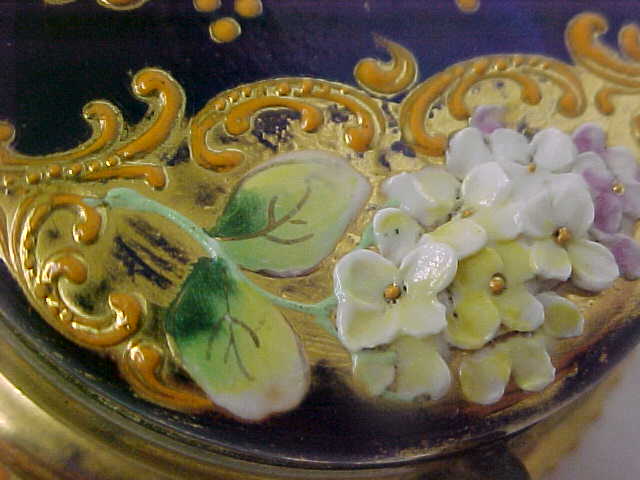 Moser 2.5x1.5 inch cobalt glass Bohemian "patch" box meticulously decorated with high relief floral and enameling. Gold trim. Hinges and clasp work very good with a well maintained metal casing. Great condition all around. $250.00. |
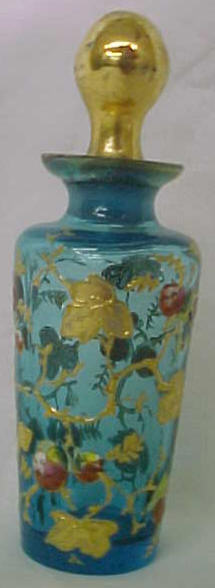 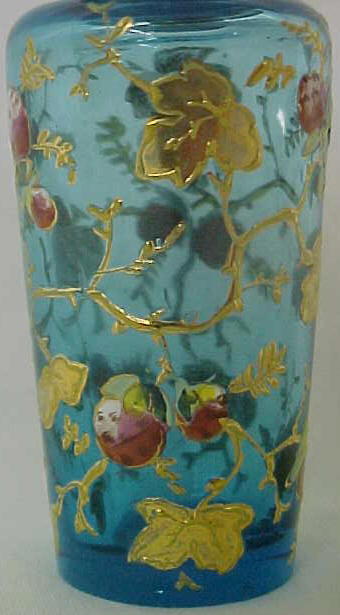 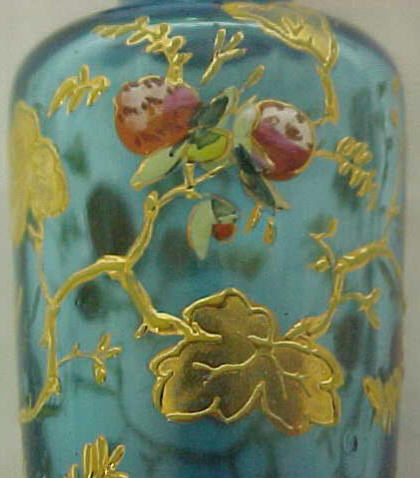 |
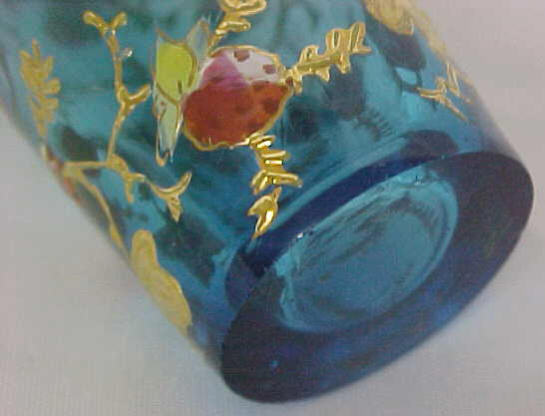 4.25
inch blue clear glass handpainted
enameled perfume bottle with strawberry decoration and gold trim.
Original stopper. Great condition with no chips, cracks, or excessive
paint wear. $195.00.
|
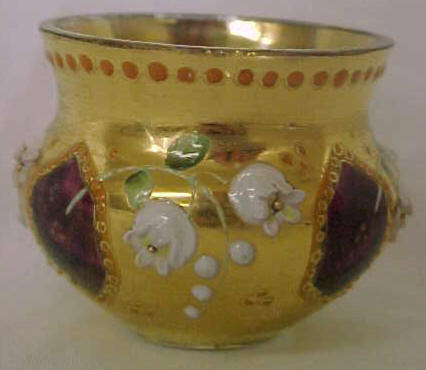 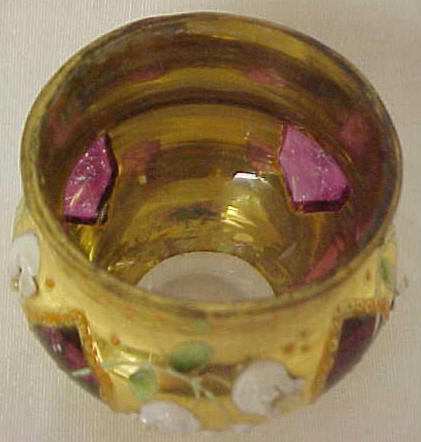 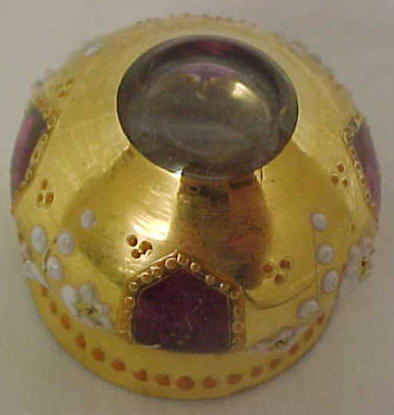 |
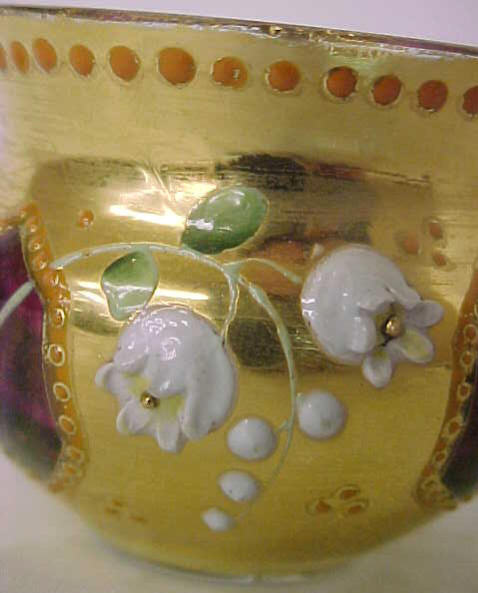 Vintage
Bohemian Moser-type salt dip with lavendar glass "windows"
and a clear glass base. Handpainted leaves and high relief enameled floral design. Gold trim. $95.00. |
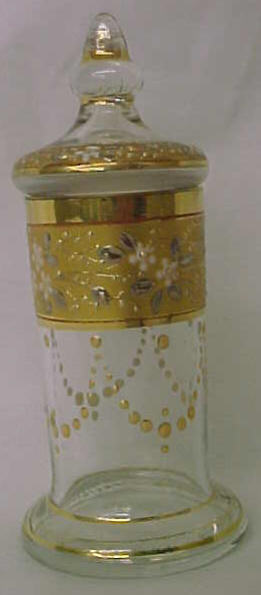  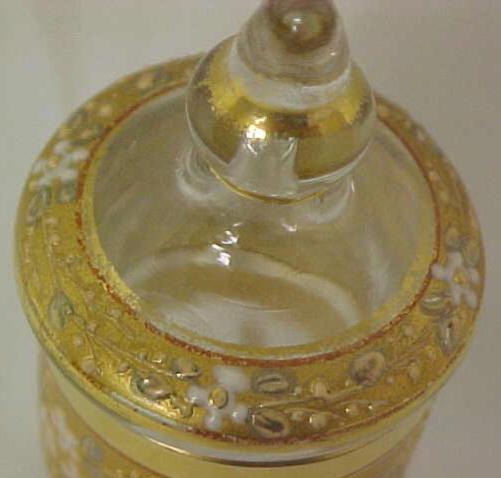 |
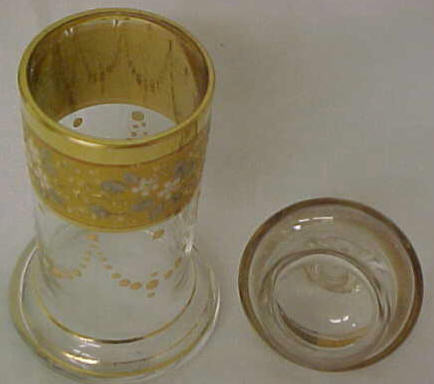 Very rare 4 inch Moser CHILD'S TOY enameled covered straw jar. Very detailed with gold trim. Excellent condition with no chips, cracks or excessive wear. $250.00. |
 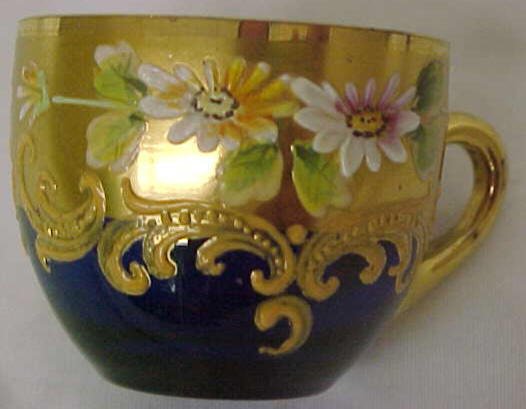 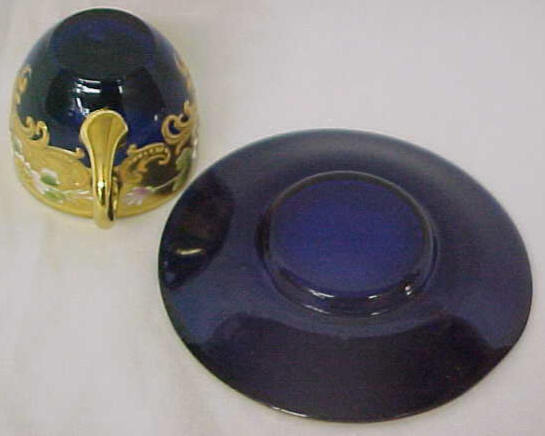 |
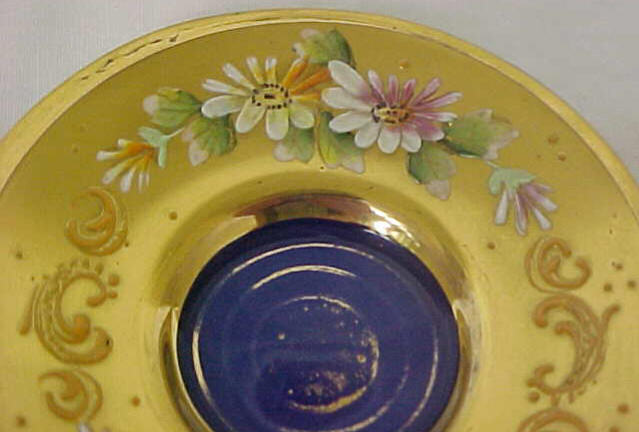 Moser mini cobalt glass 1.5 inch cup and 3.5 inch saucer with gold trim and enameled flower design. Great overall condition with minor wear to gold. $125.00. |
   |
 Moser art glass "Anniversary Set." Includes six colored glasses each etched with a different kind of bird. Each glass has it's original sticker. Original box. Perfect condition, never used. $295.00. SOLD |
   |
   |
  |
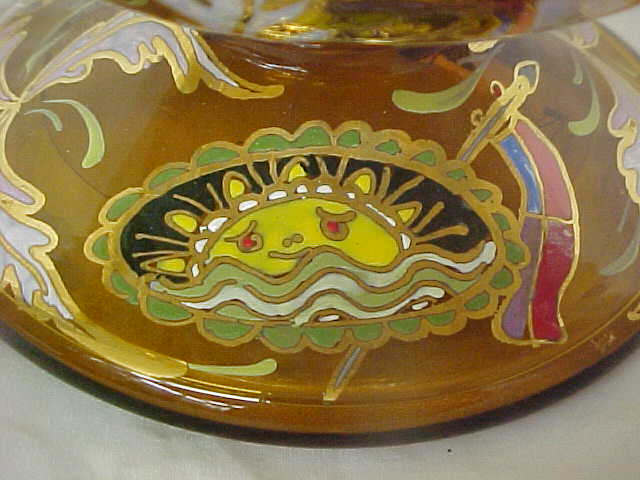  |
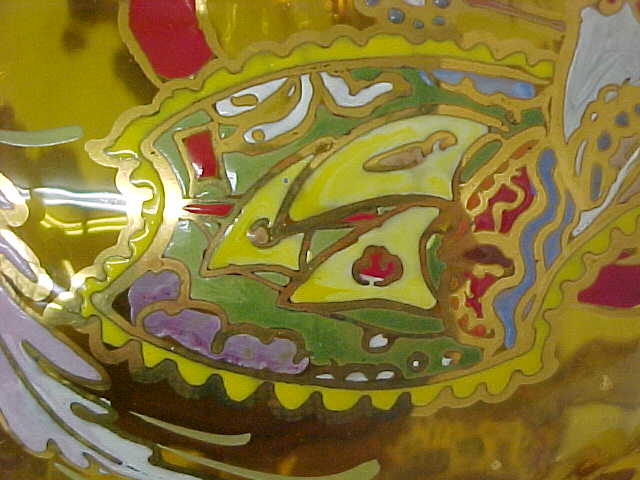
  Very colorful 10.5x7.5 inch Moser art glass signed "Royo" handpainted enameled and handled vase. Beautiful condition with no damage whatsoever. $350.00. |
   2.5 inch tall Bohemian enameled floral blue glass bowl with 6.5 inch underplate. Gold Trim. $95.00. |
  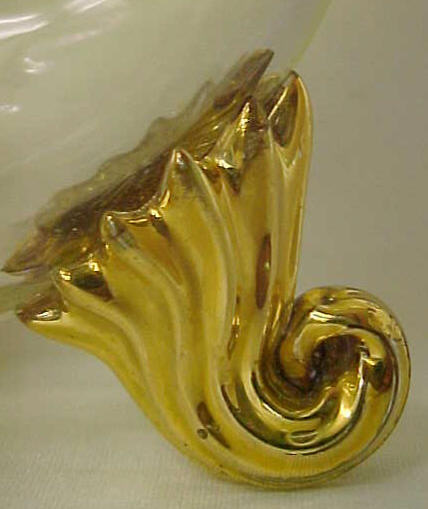 |
 c1800 signed Moser two-tone green to clear glass pillow vase with enameled floral design and gold trim. Excellent condition with no damage at all. $350.00. |
   |
  |
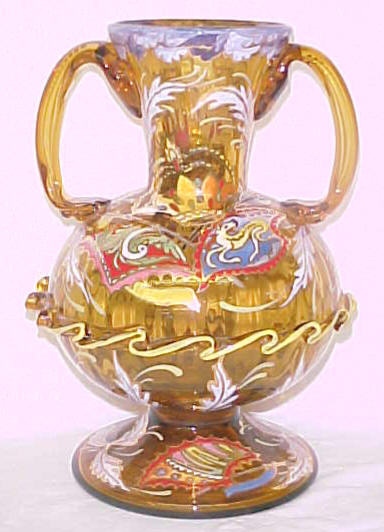
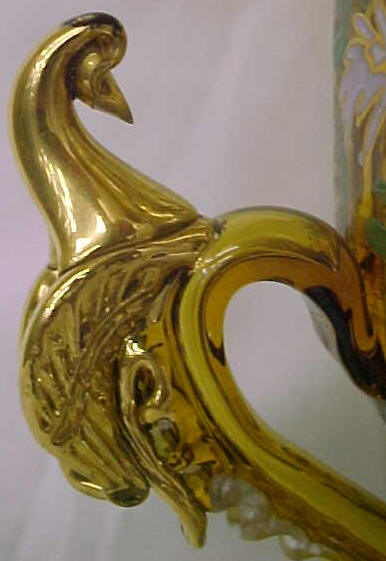
  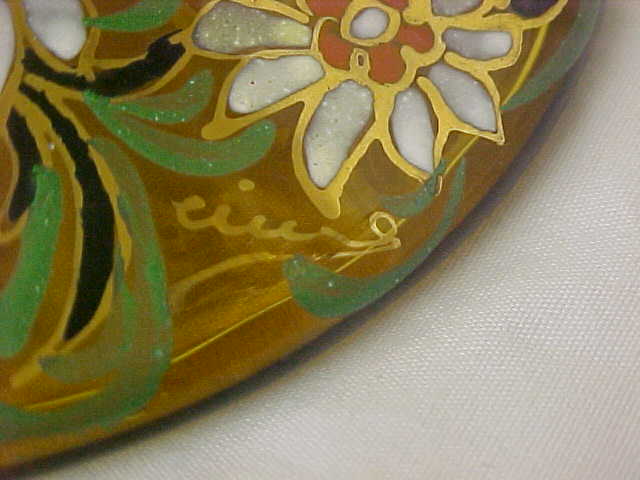 8.5x7.5 inch enameled amber clear glass vase with thread wrapped top and gold peacock handles. Decorated with handpainted birds in a very colorful design. Signed on foot. $350.00. |
   |

 c1800's
green glass to clear glass 10 inch tall (very large) gold enameled vase
with vine and geometric design. Acid etched signature on base. $650.00.
|
   |

 8x5.5
inch Czech Moser floral decorated cranberry glass fluted vase with
ruffled edges and clear glass base. Enameled with lovely floral design.
Beautiful condition with no problems. $395.00. SOLD
|
   |
   11 inch clear green glass Czech / Bohemian vase with applied jewels and beads and enameled geometric design. Great condition with no obvious damage. $165.00. |
   |
   |
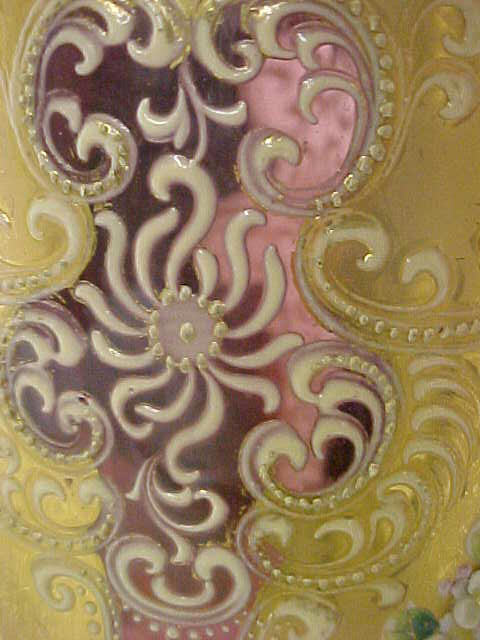
 10.5 inch highly decorated handpainted cranberry glass Bohemian vase by Moser with high relief flowers and gold trim. A very beautiful piece of Czech art glass in lovely condition with no chips cracks or excessive paint wear. $1800.00. |
   |
   Very colorful 7.25 inch handpainted floral deer vase on clear glass with a flared lip and painted base. Very nice condition with no chips cracks or paint wear. $395.00. |
   |

 7
inch signed "Royo"
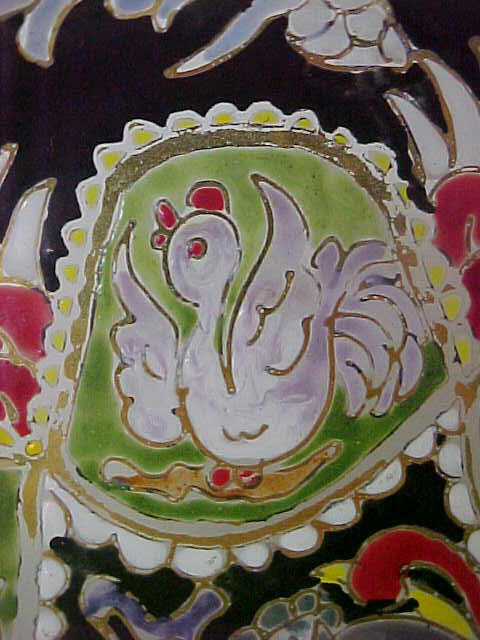
Moser plate with handpainted chickens and knight. No damage or excessive wear to paint. $65.00. |
   |
  8 inch (with steeple) Moser-style mini lamp in clear green glass with gold enameled design. Excellent condition with no damage or wear. $250.00. |
   |

 8x4.5 inch clear glass mini epergne with white floral enameling and hollow body. $225.00. |
   |
   |
 7 inch signed "Royo" clear blue glass Moser vase with handpainted deer / gazelle. Very well painted. Great detail. Gold trim. No damage or wear detected. $150.00. |
   |
   |
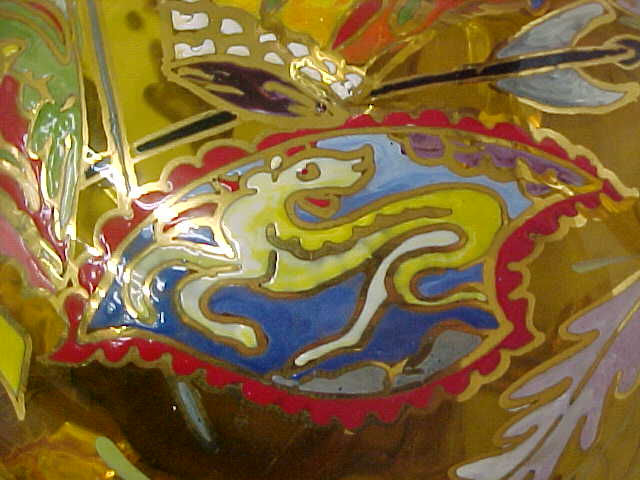
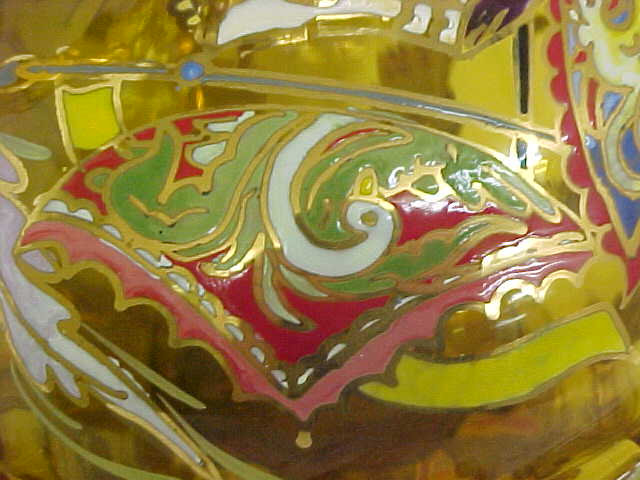
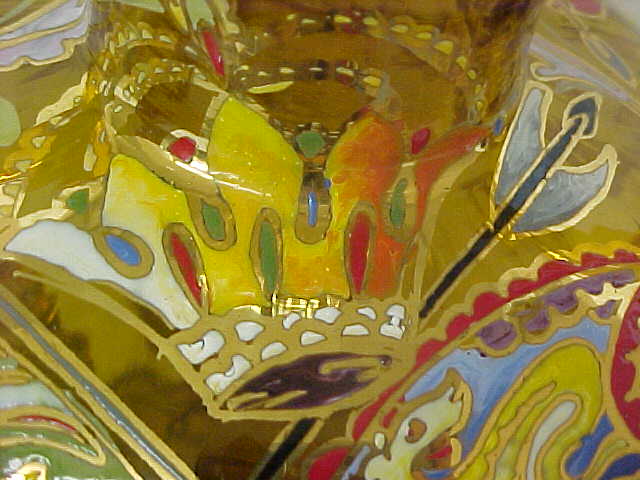
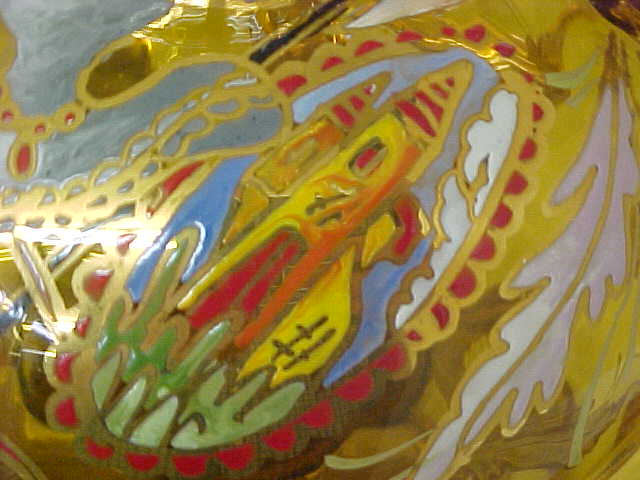
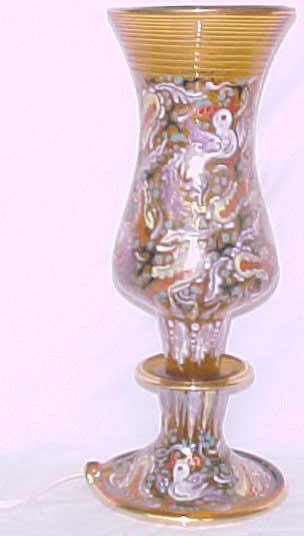
   14 inch Moser enameled bird lamp with handpainted designs on amber glass and thread wrap around top. Lamp is wired and works perfectly. It was maded to be a lamp as the last picture shows. $495.00. |
    |
 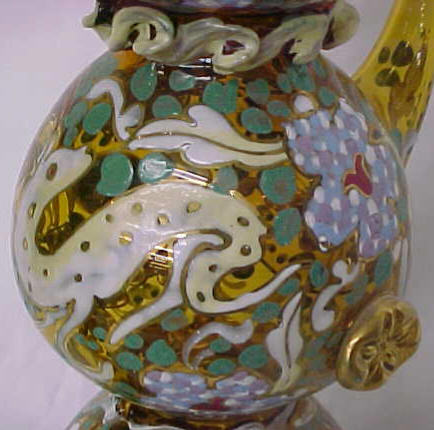  |
   15.5 inch Moser handled clear amber glass decanter with gold appled buttons and enameled bird design. Swan top is a cork. Signed on base. $395.00. |
   |
   |
 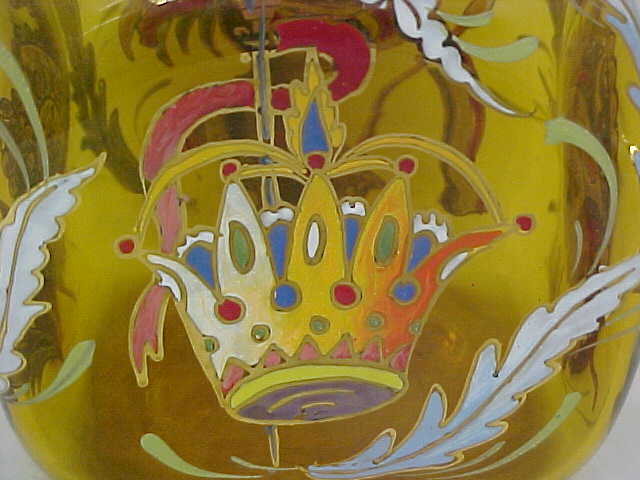  |
 21.5 inch Czech Moser handpainted amber clear glass decanter with stopper. Signed "Royo." Very colorful and detailed. $225.00. |
| The Glass of Kings:
Moser
Glassware From our Antique Quarterly archives Moser glass is the legacy of Ludwig Moser (1833-1916), a Jewish artist from the Czech Republic (then known as Bohemia). He was formally trained as a painter and engraver, but founding the Moser glass company- which thrived under his keen business sense- is what he is remembered for today. Many talented Bohemian artisans worked for the firm over the decades. Moser glass first gained recognition primarily as a very high quality engraving facility beginning in 1857, with numerous showrooms and shops in Karlsbad. Most of the artists, including Eduard Hoffman and Johann Hoffman, employed by the Moser firm were Bohemian, and much of the glass they produced from 1870- 1897 had a strongly Bohemian design ethic, using indigenous themes and motifs. The glass was decorated with heavy gilding and enameling, as well as engraving, in intricate designs. Hunt scenes were common. Some of the movements that influenced Moser's designs were the European Baroque movement, as well as work by Islamic goldsmiths and Japanese floral motifs. During this period Moser was solely a company that decorated glass blanks obtained from other companies. Not until 1893 did Moser produce their own glassware. In 1893 the Moser firm opened a new factory at Meierhofen, under Ludwig and three of his sons. Richard Kralik was the foreman and chief melter, while the cutting workshop was overseen by Rudolf Novak. The quality of the glass produced was under the strictest of control, and inferior pieces were destroyed. Items initially produced at the new facility were tablewares, vases, ashtrays, etc, with different blanks bearing different embellishments (which could, of course be custom ordered). Moser also ended up producing -in fact, inventing- very specific types of tablewares for very specific functions. Special glasses for different types of wines, for example, and separate glasses for certain liqueurs created world wide recognition of Moser's fine crystal wares. One line, the Royal pattern designed in 1908, was so named after Edward VII ordered a complete set. With that sale, the genie was out of the bottle, so to speak, and the tradition of the "Glass of Kings" was established. Moser glassware over the years was sold to many royal families, presented to popes, ordered by maharajas, and used by diplomats up to the present day. One notable feature of Bohemian glass in general is the use of "panel-faceting", a cutting which takes advantage of the refractive qualities of glass; Moser reproduced this design element in mold form which didn't require costly cutting. Also in favor was a type of casing that trapped a layer of gold or silver foil in between cased glass layers. The Moser company also experimented with rare earth glass ware- that is, glass colored by the addition of rare elements to the mix. The Moser name was associated with the Teplitz porcelain production company, also Czechoslovakian. It is likely that Moser simply marketed their porcelain and perhaps sold some of it in their showrooms. There is evidence of cross pollination amongst the artists employed by the firms. However it is unlikely that Moser engaged in the actual production of Teplitz porcelain, as the techniques and equipment vary drastically from glass to porcelain. Ludwig most likely retired around the turn of the century, and production was overseen by several of his sons. Production was reduced during WWI, but thanks to the adaptability of the designers, foreign markets kept the company afloat during turbulent war times. Although the market gained some momentum after the war, the collapse of the newly Czechoslovakian currency forced the Moser family to sell controlling interest to the bank. The Mosers continued to work with the designers and to market their glass; in fact, with the financial burden off his shoulders, Richard Moser was better able to expand the visibility of the firm at glass expositions. The Mosers were highly involved in various international exhibitions during the Art Nouveau movement, and Koloman Moser and Josef Hoffman were founding members of the Wiener Werkstatte, an influential workshop of the era. The Moser family scattered around the world during WWII. Richard went to South America and was never heard from again, even by his own sons. Leo went to France where he briefly served as director-designer to the Cristalleries de St. Louis. Ludwig spent 42 months in a Nazi concentration camp and later emigrated to America. Leo was forced to resign at the St. Louis works and attempted to emigrate to South America, though as (bad) luck would have it, they ended up in a concentration camp instead. Leo's wife appealed to Eleanor Roosevelt, who apparently arranged for their release and they subsequently ended up in New York. Germany took control of Moser's stock holdings, and dissolved the board of directors. The factory complex was turned over to production of essentials for the war effort, and many designers and artisans were interned in concentration camps as political prisoners. Those who remained were virtual slave labor- perhaps not a wise move on the part of the German government. The remaining workers deliberately altered the proportions of ingredients, which caused disastrous shattering of German tank windows and filter glasses while on the war front. Eventually the fires were extinguished in 1945. Moser glass works were successfully reconstructed by the
Communist
government
after the war. The output of Moser relies to this day heavily on
designs
produced before 1933, though some contemporary designs were introduced.
Moser Glassworks was one of 15 firms granted independent operation by
the
Communist government. After the transition to a free market, Moser has
operated successfully into the present day. -Holly Regan |
 Click the link above to shop more than 10,000 antiques and view 85+ articles on antiques. Looking for a specific vintage item? Ask us! 360 568-2131 / starmall@myantiquemall.com |
  |