"Cameos are often worn as jewelry,
but in ancient times were mainly used for signet rings, although the
largest examples were probably too large
for this, and were just admired as objets d'art. Stone cameos of great
artistry were made in Greece dating back as far as the 3rd century BC.
The Farnese Tazza (a cup) is the oldest major Hellenistic piece
surviving. They were very popular in Ancient Rome, especially in the
family
circle of Augustus. The most famous stone "state cameos" from this
period are the Gemma Augustea, the Gemma Claudia made for the
Emperor Claudius, and the largest flat engraved gem known from
antiquity, the Great Cameo of France.
The technique has since
enjoyed periodic revivals, notably in the early Renaissance, and again
in the 18th and 19th centuries.
The Neoclassical revival began in France with Napoleon's support of the
glyptic arts, and even
his coronation crown was decorated with cameos." READ
MORE
Lafayette
Schoolhouse Antique Mall, OR
Looking for a particular area of antiques? We will search our three malls for you!


Cameo brooch/pendant in 12K gold with 14K gold chain. Cameo measures 1.25” x 1”, chain
measures 16” long. Space 22, inventory 1777. $68.00.
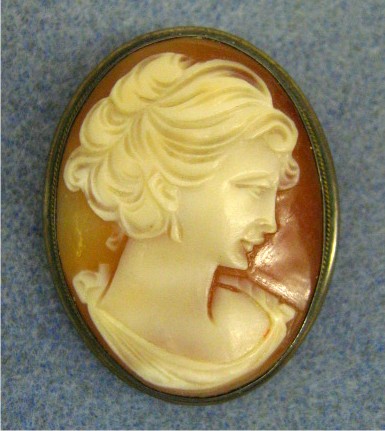

Cameo brooch/pendant. Measures 1.5” x 1.125”. Space 19, inventory 16509. $79.50.
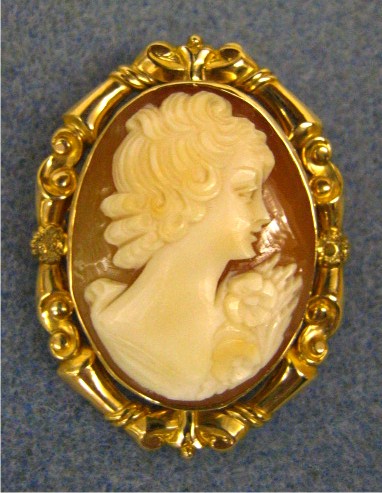
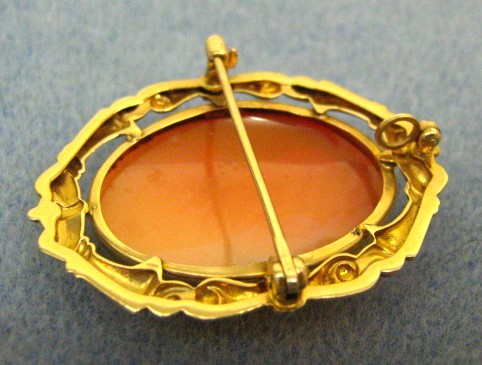

Cameo brooch/pendant in 10K gold. Measures 1.5” x 1”. Space 44, inventory RUV. $250.00.
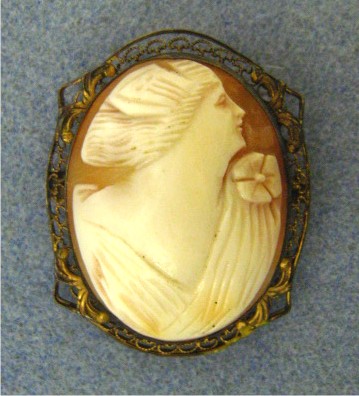

Cameo brooch. Measures 1.5” x 1.25”. Space 44, inventory n/a. $105.00.
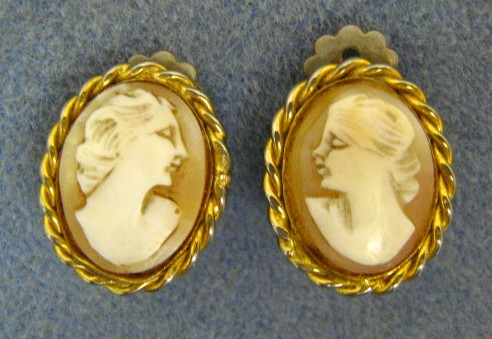

Cameo clip-on earrings. Each measure .75” x 5/8”. Space 18, inventory 1106. $45.00.
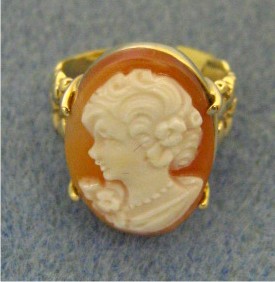

Cameo ring in 10K gold. Ring is size 4.5. Space 18, inventory 1974. $149.00.
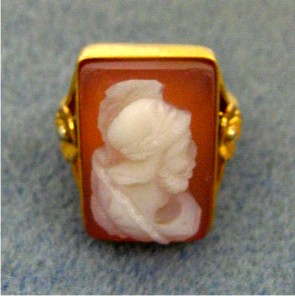

Carnelian cameo ring in 10K gold. Ring is size 6. Space 18, inventory 1215. $375.00.


Cameo brooch, pendant, and locket. Measures 1.5” x 1.25”. Space 12, inventory KB. $125.00.
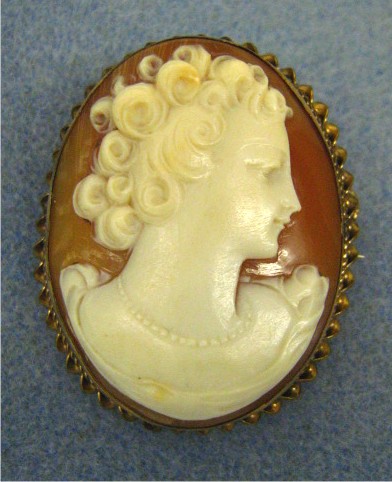

Cameo brooch in 10K gold. Measures 1.5” x 1.25”. Space 18, inventory 1521. $125.00.
 .
.Click the link above to shop more than 10,000 antiques
and view 85+ articles on antiques.


